On November 21, 2025, The Campbell's Company closed at $31.66 on the Nasdaq Global Select Market — a quiet finish to a brutal year. The stock, once trading above $46.95 in early 2025, had lost nearly a third of its value over the past 12 months. Volume spiked to 6.3 million shares that day, nearly double the average, as investors scrambled to reassess a brand that once defined American pantries — but now finds itself caught between nostalgia and reality.
A Company in Transition
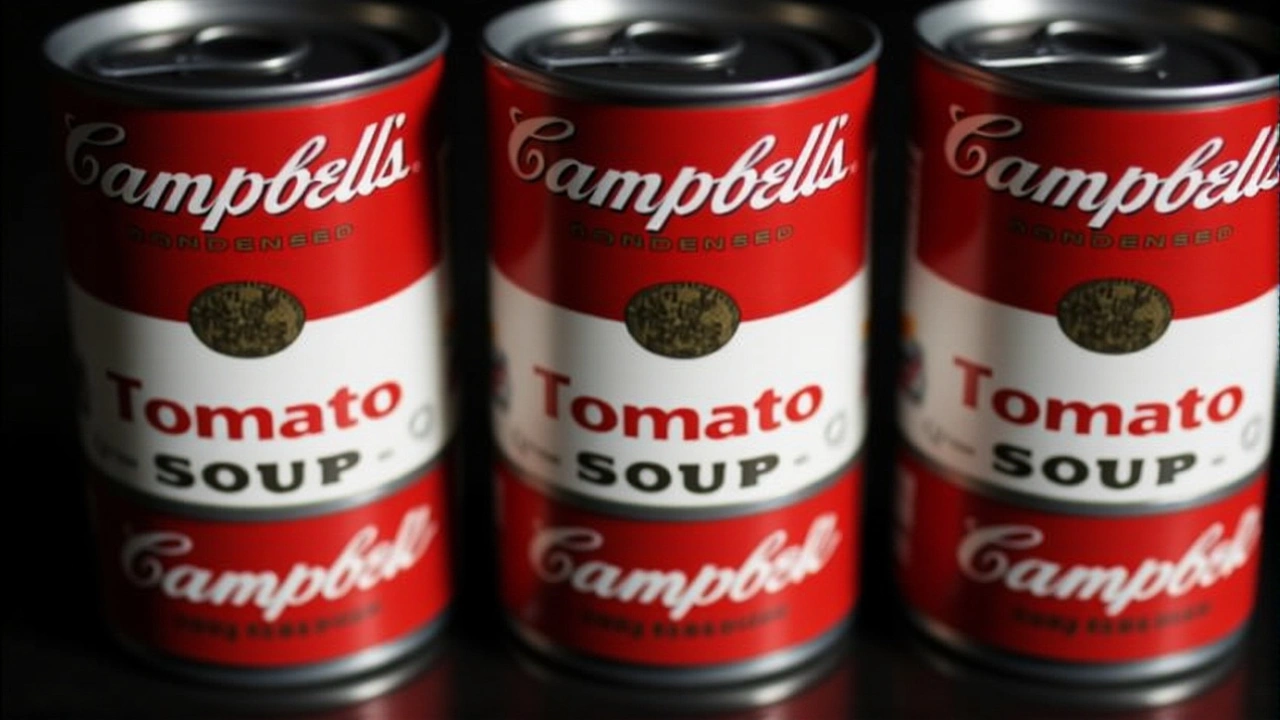
The Campbell’s Company, headquartered in Camden, New Jersey, has spent decades trying to shed its canned soup identity. And yet, the market isn’t rewarding the pivot. As of its fiscal year ending July 2025, snacks now make up 43% of revenue — more than soup (27%), other simple meals (23%), and beverages (7%). That’s a radical shift from the red-and-white label legacy. But here’s the twist: consumers aren’t buying the new Campbell’s the way they bought the old one.
Investors see a company with strong brand recognition but weak growth. The The Campbell's Company trades at a Price/Earnings ratio of 10.62 — well below PepsiCo (18.64) and even General Mills (12.08). Its Price/Sales ratio of 0.93 is less than half of PepsiCo’s 2.18. These aren’t random numbers. They reflect a market that sees Campbell’s as a value trap: cheap because it’s stagnant.
Financial Metrics Tell a Troubling Story
Even the dividends — once a safe haven for retirees — are now a red flag. The trailing yield sits at 4.93%, and the forward yield is identical. That’s high, yes. But high yields in falling stocks aren’t a sign of strength. They’re a sign of desperation. Investors are being paid to hold a stock that keeps dropping.
Liquidity metrics are even more alarming. The Quick Ratio of 0.25 means the company has just 25 cents in liquid assets for every dollar of short-term debt. The Current Ratio of 0.77 is worse than the industry average of 1.5. In plain terms: Campbell’s is running on fumes. It’s not bankrupt — but it’s not breathing easily either.
And then there’s the market cap. Morningstar reports $9.21 billion as of November 21, 2025. Public.com says $9.32 billion as of November 14. The difference is negligible — what matters is the trend. Both confirm a 26.7% drop over the past year and a 6.6% slide in just the past few weeks. That’s not a correction. That’s a reckoning.
Why the Market Is Losing Faith
It’s not just about soup. It’s about relevance.
Snacks like Goldfish and Pepperidge Farm are profitable, yes — but they’re also crowded markets. Kellogg’s, Mondelez, and private labels are eating into those margins. Meanwhile, the soup business — once a $3 billion pillar — is shrinking. Older consumers still buy it. Younger ones? They’re making bone broth, ordering meal kits, or just eating out. Campbell’s didn’t adapt fast enough to the shift from shelf-stable to fresh, from canned to customizable.
Compare that to PepsiCo, which turned its snack division into a global powerhouse while keeping soda relevant through innovation. Or General Mills, which bought Blue Buffalo and invested heavily in organic and plant-based lines. Campbell’s tried to do both — and ended up doing neither well.
What’s Next? The Uncertainty Lingers
Morningstar’s fair value assessment from October 13, 2025, still rates Campbell’s as having “medium uncertainty.” That’s financial jargon for: we don’t know if this company can turn it around. The 52-week range — $29.39 to $46.95 — shows wild swings, but no clear direction. The stock’s been bouncing between $30 and $32 for months. That’s not a recovery. That’s a plateau of decline.
Analysts are watching two things: the next earnings call (scheduled for late January 2026) and whether the company will spin off its snack division. Some insiders say it’s inevitable. Others argue the brand equity is too tied together. Either way, shareholders won’t get peace until there’s a clear strategy — not just a product list.
Historical Context: From $8 to $46 and Back
For perspective, look back. In January 1995, Campbell’s traded between $8.75 and $41.42. It peaked above $53 in November 1995. That was a different era — one where soup was a staple, not a relic. By 2012, it hovered between $24 and $37. Now, after 30 years of evolution, it’s back near its 2012 lows — but with far more debt, fewer loyal customers, and a brand that’s lost its emotional grip on America.
It’s not that Campbell’s is failing. It’s that the world moved on. And the market is finally catching up.
Frequently Asked Questions
Why is Campbell’s stock down so much despite its high dividend?
High dividends often signal distress when the stock price is falling. Campbell’s 4.93% yield looks attractive, but it’s unsustainable if profits keep shrinking. The company’s liquidity ratios — Quick Ratio of 0.25 and Current Ratio of 0.77 — show it’s struggling to cover short-term obligations. Investors fear the dividend could be cut, which would trigger another sell-off.
How does Campbell’s compare to PepsiCo and General Mills?
Campbell’s trades at a much lower valuation: its P/E of 10.62 is less than half of PepsiCo’s 18.64 and below General Mills’ 12.08. Its Price/Sales ratio of 0.93 is less than half of PepsiCo’s 2.18. While Campbell’s has diversified into snacks, its growth is flat, whereas PepsiCo and General Mills have successfully expanded into healthier, premium, and global segments — giving them higher investor confidence and pricing power.
What’s driving the recent trading volume spike?
The 6.3 million shares traded on November 21, 2025, far exceeded the average of 6 million, suggesting institutional rebalancing or activist investor activity. Given the 26.7% year-over-year drop, hedge funds may be exiting, while value investors are testing the bottom. The bid/ask spread of $30.93/$30.94 also indicates thin liquidity — a sign of market uncertainty, not confidence.
Is Campbell’s likely to spin off its snack business?
Many analysts believe a spinoff is inevitable. The snack division — Goldfish, Pepperidge Farm — generates more profit and trades at higher multiples than the soup business. Separating them could unlock hidden value. But leadership has resisted, fearing brand dilution. The next earnings call in January 2026 may finally reveal whether the board is ready to make the hard choice.
How has Campbell’s revenue mix changed over the past decade?
In 2015, soup made up over 40% of revenue; today, it’s just 27%. Snacks have grown from 30% to 43%, while beverages and simple meals have filled the gap. But growth in snacks hasn’t translated to profitability. Competitors like Kellogg’s and Mondelez have stronger distribution and innovation pipelines. Campbell’s has relied on brand loyalty, not product evolution — and that’s no longer enough.
What does the 1995–2025 price history tell us about Campbell’s long-term trajectory?
Campbell’s stock rose from under $9 in 1995 to over $53 in 1995 — a 500% surge fueled by brand dominance. Since then, it’s been a slow erosion. The 2025 price of $31.66 is lower than its 1995 peak in real terms, adjusted for inflation. The company didn’t just lose market share — it lost cultural relevance. The stock isn’t just down; it’s a symbol of a legacy brand that failed to reinvent itself for a new generation.